Almost everyone gets headaches. But not all headaches are the same — and knowing the difference between a tension headache, a migraine, and a headache that signals something more serious could make a significant difference in how you feel and how well you are treated.
At Neuro Rehab & Pain Institute in Edinburg, TX, Dr. Priti M. Manohar evaluates and treats headache and migraine patients from across the Rio Grande Valley. This guide explains the key differences between headache types, when you should seek specialist care, and what effective migraine treatment looks like today.
Not All Headaches Are Migraines — and Not All Migraines Look Alike
One of the most common misconceptions about migraines is that they are simply very bad headaches. In fact, migraine is a neurological condition with a specific set of features — and the headache itself, while often severe, is just one component.
The most common headache types include:
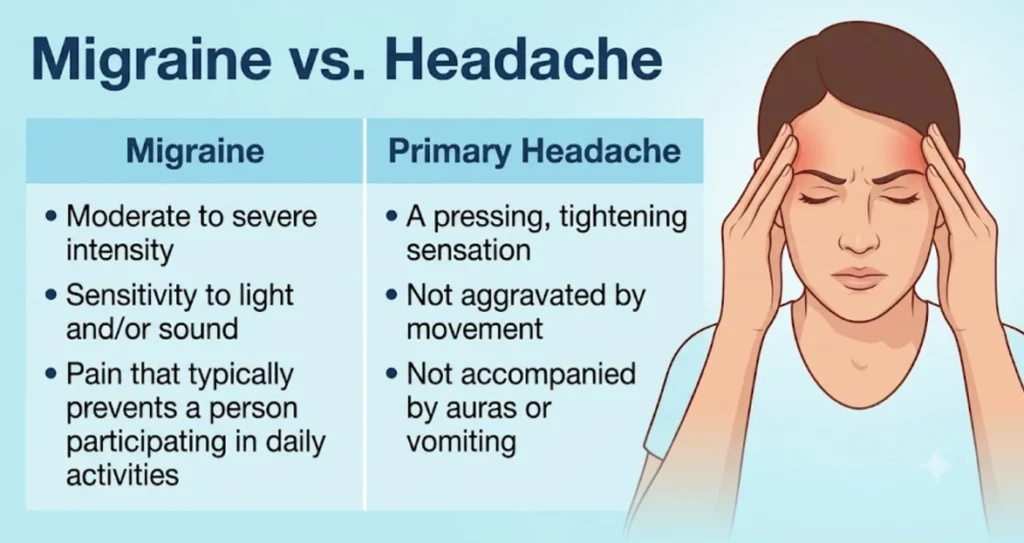
- Tension-type headache: The most common headache type overall. Typically described as a dull, pressing, or band-like pain around the head. Usually bilateral (both sides), not worsened by activity, and not accompanied by significant nausea or light sensitivity. Often associated with stress, poor posture, or eye strain.
- Migraine without aura: Moderate to severe head pain, usually on one side, pulsating or throbbing in quality, worsened by routine physical activity, and accompanied by nausea and/or sensitivity to light and sound. Episodes typically last 4 to 72 hours.
- Migraine with aura: Same as above, but preceded or accompanied by neurological symptoms called an aura — most commonly visual disturbances such as flashing lights, zigzag lines, blind spots, or temporary vision loss. Aura can also include tingling, numbness, or difficulty speaking.
- Cluster headaches: Severe, excruciating pain typically around one eye, occurring in clusters of episodes over days to weeks with periods of remission. Often accompanied by eye watering, nasal congestion, and restlessness. More common in men.
- Chronic daily headache: Headache occurring 15 or more days per month for more than 3 months. Can develop from episodic migraine, tension headache, or medication overuse (rebound headache).
How to Tell If Your Headache Is a Migraine
A useful clinical tool is the ID Migraine questionnaire — three simple questions that have been shown to identify migraine with high accuracy:
- In the past three months, did your headache cause you to feel nauseated or sick to your stomach?
- In the past three months, did light bother you when you had a headache?
- In the past three months, did your headaches limit your ability to work, study, or do what you needed to do for at least one day?
If you answered yes to two or all three of these questions, migraine is likely. This does not replace a formal neurological evaluation — but it can help you communicate more precisely with your doctor about what you are experiencing.
Why South Texas Patients Are Particularly Prone to Migraines
The Rio Grande Valley climate creates several well-known migraine triggers that affect our patient population disproportionately:
- Extreme heat: High temperatures and direct sunlight are among the most commonly reported migraine triggers. RGV summers, with temperatures regularly exceeding 100°F, are particularly challenging for migraine sufferers.
- Dehydration: Heat drives fluid loss, and even mild dehydration is a potent migraine trigger. Many RGV patients do not drink enough water during the long, hot summer months.
- Barometric pressure changes: Seasonal weather fronts, including those associated with Gulf coast weather patterns, cause rapid changes in atmospheric pressure — another well-documented migraine trigger.
- Irregular sleep: Shift work is common in the RGV, and sleep disruption is one of the most reliable migraine triggers.
Understanding your personal triggers is an important part of migraine management, and Dr. Manohar will discuss trigger identification and lifestyle modification as part of your treatment plan.
When Should You See a Neurologist for Headaches?
While many headaches can be managed with over-the-counter medications and lifestyle changes, certain situations call for neurological evaluation. You should see a neurologist if:
- Your headaches are occurring more than 4 days per month and significantly affecting your quality of life
- Over-the-counter medications are no longer working or you are using them more than 10 to 15 days per month (this pattern can cause medication overuse headache, also called rebound headache)
- Your headaches have changed in character, frequency, or severity — especially if they are getting worse over time
- You experience a sudden, severe headache unlike any you have had before — this is the classic ‘thunderclap headache’ that can signal a serious vascular event and requires emergency evaluation
- Your headache is accompanied by fever, stiff neck, confusion, vision changes, weakness, or slurred speech
- You are taking pain medication for headaches more than twice a week
- Migraine is affecting your ability to work, care for your family, or participate in daily life
What Effective Migraine Treatment Looks Like at NRPI
Migraine is a treatable condition — and the options available today are significantly better than what was available even a decade ago. Dr. Manohar offers a comprehensive approach that may include:
- Acute (rescue) medications: Triptans, which target the specific pain pathways of migraine, are the most effective class of acute migraine treatment for most patients. Newer options including gepants and lasmiditan are also available for patients who cannot tolerate or do not respond to triptans.
- Preventive medications: For patients with frequent migraines, daily preventive medications can reduce the number of headache days per month significantly. Options include certain blood pressure medications, antidepressants, anticonvulsants, and the newer CGRP antagonist class of migraine-specific preventives.
- CGRP monoclonal antibodies: Injectable monthly or quarterly medications specifically designed for migraine prevention — among the most significant advances in migraine treatment in decades.
- Behavioral and lifestyle strategies: Trigger identification, sleep hygiene, stress management, hydration habits, and regular meal schedules are all evidence-based components of migraine management.
- Telehealth follow-up: For ongoing migraine management after the initial evaluation, many appointments can be conducted via telehealth — particularly convenient for RGV patients who live far from Edinburg.
Frequently Asked Questions About Migraines
Are migraines hereditary?
Yes — migraines have a strong genetic component. If one parent has migraines, a child has approximately a 50% chance of developing them. If both parents have migraines, the risk increases to around 75%. This does not mean migraines are inevitable, but it does explain why migraines often run in families.
Can children have migraines?
Absolutely. Migraines are among the most common neurological conditions in children and adolescents. Pediatric migraines may look different from adult migraines — they tend to be shorter in duration, more often bilateral, and may be accompanied more prominently by abdominal pain and vomiting. Dr. Manohar sees pediatric and adult migraine patients at NRPI.
Is there a cure for migraines?
There is currently no cure for migraine as a neurological condition. However, highly effective treatments exist that can dramatically reduce the frequency, severity, and impact of migraines on daily life. Many patients with previously disabling migraines achieve very good control with the right treatment plan.
Can I see Dr. Manohar via telehealth for my migraines?
Yes. After an initial in-person evaluation, follow-up migraine management appointments are well-suited to telehealth. This is especially helpful for patients in Harlingen, Brownsville, Rio Grande City, and other RGV communities who face a longer drive to our Edinburg office.
Serving Headache and Migraine Patients Across the Rio Grande Valley
Neuro Rehab & Pain Institute serves headache and migraine patients in Edinburg, McAllen, Pharr, Mission, Weslaco, Harlingen, Rio Grande City, Brownsville, and across South Texas. If migraines are affecting your life — your work, your family, your ability to enjoy the day — please schedule an evaluation with Dr. Manohar. Effective treatment is available, and you do not have to keep managing this alone.
Call us: (956) 683-9300