Obstructive Sleep Apnea

Obstructive Sleep Apnea

Obstructive sleep apnea (OSA) occurs when breathing repeatedly stops and starts during sleep. This is a potentially serious sleep disorder.

During an obstructive sleep apnea episode, your throat muscles intermittently relax and block your airway during sleep. Breathing usually resumes with a loud gasp, snort, or body jerk. These episodes can interfere with sound sleep and can reduce the flow of oxygen to vital organs and cause irregular heart rhythms.

Sleep Apnea FAQs

When you have OSA, you briefly but repeatedly stop breathing while you sleep. Depending on the severity of your apnea, you can stop breathing 5 to 30 times or more every hour.
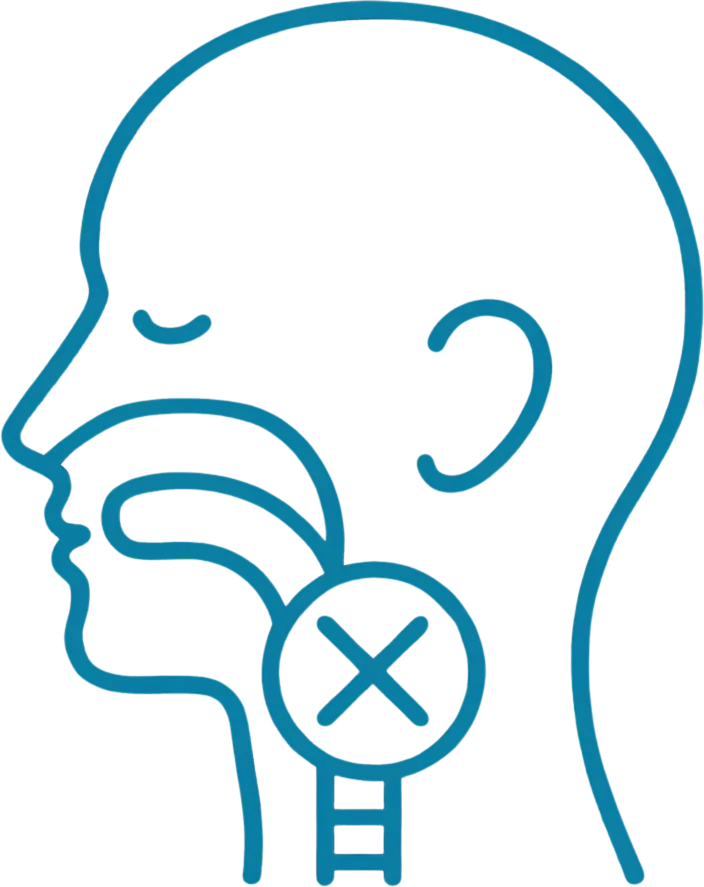
The problem occurs when your tongue and tissues in your throat relax and move toward the airway in your throat. If the tissues partially cover the airway, they vibrate and cause snoring. When the tissues completely cover the airway, you stop breathing.
As soon as you stop breathing, oxygen levels drop, and your brain nudges you to start breathing again. In most cases, you don’t fully awaken, so you don’t know you stopped breathing.
You could also develop central sleep apnea or complex sleep apnea. If you have central sleep apnea, you stop breathing when your brain fails to send signals to the muscles that control breathing. Complex sleep apnea is a combination of OSA and central sleep apnea.
Loud snoring is the top symptom of OSA (but not other types of sleep apnea). In many cases, others in your household hear loud snoring, a moment of sudden silence (when you stop breathing), and then a gasp when you finally take a breath.

All types of sleep apnea cause symptoms such as:

  • Difficulty waking in the morning
  • Fatigue during the day
  • Choking while you sleep
  • Morning headaches
  • Dry mouth in the morning
  • Restless sleep
  • Forgetfulness
  • Difficulty concentrating
  • Depression
  • Irritability
OSA is also associated with a higher risk of insomnia.
Your symptoms may strongly suggest sleep apnea, but the only way to verify the problem is with a sleep study (polysomnogram). For a home sleep study, you wear several monitors that measure your breathing, air flow, and oxygen levels while you sleep.
At the sleep lab, technicians collect additional information that can diagnose other sleep disorders. For example, they record your brain waves, heart activity, and eye and leg movements.
If you have mild OSA and you’re overweight, losing the extra pounds may be enough to end your sleep apnea. Otherwise, Dr. Manohar recommends treatments such as continuous positive airway pressure (CPAP) and oral appliances.
With CPAP, you wear a mask, and the CPAP device sends pressurized air into your mouth that keeps your airway open. An oral appliance fits over your upper and lower teeth, where it holds your jaw and prevents your tongue from covering your airway.
If you snore loudly or drag yourself through the day, call Neuro Rehab & Pain Institute, or book an appointment online today.

Take the next step toward better health—schedule a consultation with Neuro Rehab & Pain Institute in Edinburg, TX today.