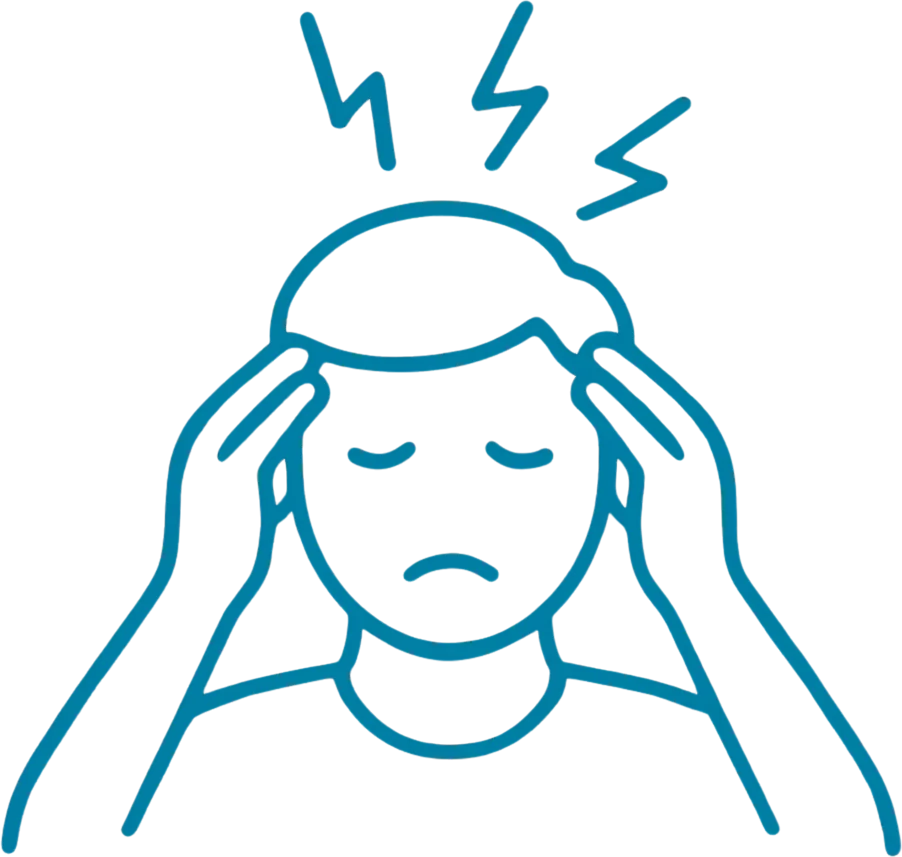
Headache is pain in any region of the head. Headaches may occur on one or both sides of the head, be isolated to a certain location, radiate across the head from one point, or have a vise-like quality. A headache may be a sharp pain, throbbing sensation or dull ache. Headaches may appear gradually or suddenly, and they may last less than an hour or for several days.
A migraine headache can cause intense throbbing or a pulsing sensation in one area of the head and is commonly accompanied by nausea, vomiting, and extreme sensitivity to light and sound.
Migraine attacks can cause significant pain for hours to days and be so severe that all you can think about is finding a dark, quiet place to lie down.
Some migraines are preceded or accompanied by sensory warning symptoms (aura), such as flashes of light, blind spots, or tingling in your arm or leg.
Medications and treatment can help reduce the frequency and severity of migraines.
Primary headaches:
Primary headaches develop from problems in the muscles, nerves, and blood vessels in your head and neck. Three of the most common include migraine, tension, and cluster headaches.
Secondary headaches
Are migraines associated with epileptic seizures?
Migraines and seizures share a close relationship. If you have one of these conditions, you have double the risk (or more) of developing the other. Additionally, 45% of people with epilepsy have a headache after a seizure.