When most people think of sleep apnea, they think of loud snoring and a tired spouse. What they may not realize is that sleep apnea is a serious neurological and cardiovascular condition with wide-reaching consequences for brain health — consequences that go far beyond nighttime noise.
At Neuro Rehab & Pain Institute in Edinburg, TX, Dr. Priti M. Manohar evaluates and treats sleep disorders including sleep apnea as part of her comprehensive neurology practice. For patients across the Rio Grande Valley who have been told they snore, who wake up unrefreshed, or who suspect their sleep quality is affecting their health, this guide is for you.
What Is Sleep Apnea?
Sleep apnea is a condition in which breathing repeatedly stops and starts during sleep. The most common form — obstructive sleep apnea (OSA) — occurs when the muscles at the back of the throat relax and partially or fully block the airway during sleep. The brain detects the drop in oxygen and triggers a brief arousal to resume breathing, often so short that the person does not remember it. This cycle can repeat hundreds of times per night.
A less common form, central sleep apnea (CSA), occurs when the brain fails to send the correct signals to the muscles that control breathing — a neurological problem rather than a mechanical one. Mixed sleep apnea involves both components. Because central sleep apnea is fundamentally a brain and nervous system disorder, neurological evaluation is essential.
Why Sleep Apnea Is a Brain Health Issue
The neurological consequences of untreated sleep apnea are more significant than most patients realize:
- Cognitive impairment: Repeated oxygen deprivation during sleep is associated with memory problems, difficulty concentrating, slowed processing speed, and in severe cases, increased risk of dementia. Studies have found that untreated sleep apnea is associated with brain changes similar to those seen in early Alzheimer’s disease.
- Increased stroke risk: Sleep apnea significantly increases the risk of stroke — one of the most serious neurological emergencies. The repeated drops in blood oxygen and the spikes in blood pressure that accompany each apnea event strain the cerebrovascular system over time.
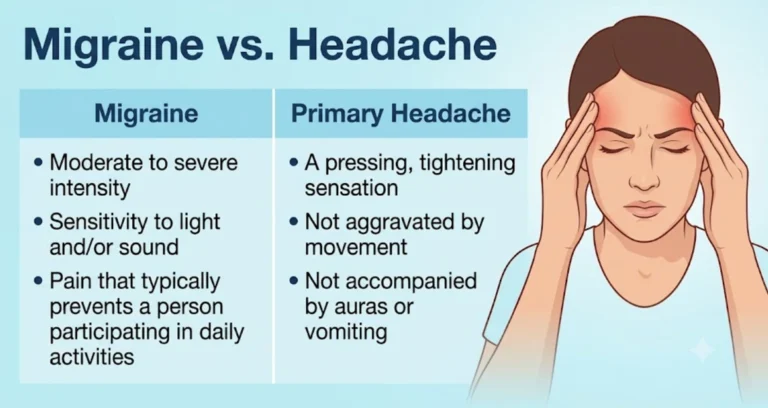
- Headaches: Morning headaches are a classic symptom of sleep apnea, caused by elevated carbon dioxide levels and blood vessel changes during oxygen-deprived sleep.
- Mood and mental health: Depression, anxiety, and irritability are common in patients with untreated sleep apnea — in part because REM sleep, which is critical for emotional regulation, is severely disrupted.
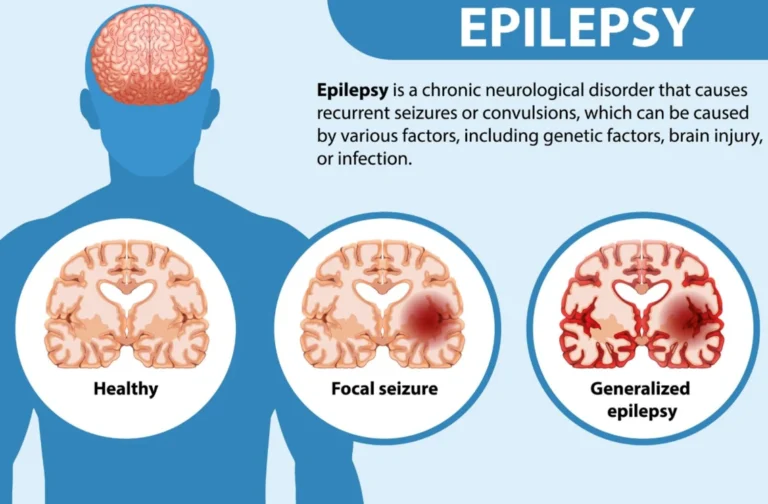
- Worsened neurological conditions: For patients already managing epilepsy, Parkinson’s disease, multiple sclerosis, or other neurological conditions, poor sleep significantly worsens symptom control. Sleep deprivation is one of the most potent seizure triggers.
This is why a neurologist — not just a sleep technician or primary care doctor — should be involved in evaluating and managing sleep apnea, particularly in patients who have other neurological symptoms or conditions.
What Are the Symptoms of Sleep Apnea?
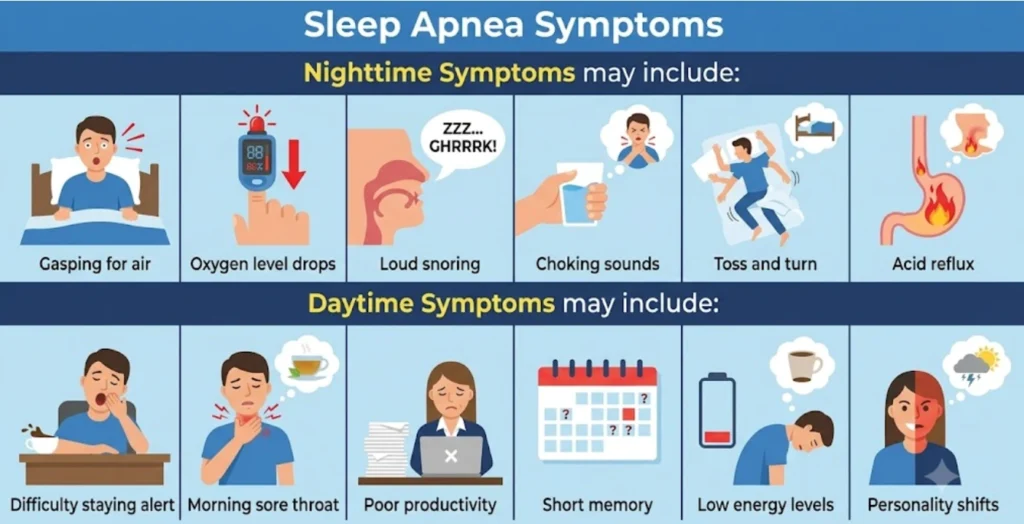
- Loud, chronic snoring — often noticed by a bed partner before the patient themselves
- Witnessed episodes of stopped breathing during sleep
- Waking up with a dry mouth, sore throat, or headache
- Waking up feeling unrefreshed despite a full night of sleep
- Excessive daytime sleepiness — falling asleep easily during quiet activities
- Difficulty concentrating or memory problems
- Irritability, depression, or mood changes
- Frequent nighttime urination
Importantly, not all sleep apnea patients snore loudly, and not all loud snorers have sleep apnea. A formal sleep study is the only reliable way to diagnose the condition.
How Is Sleep Apnea Diagnosed? Home Sleep Testing at NRPI
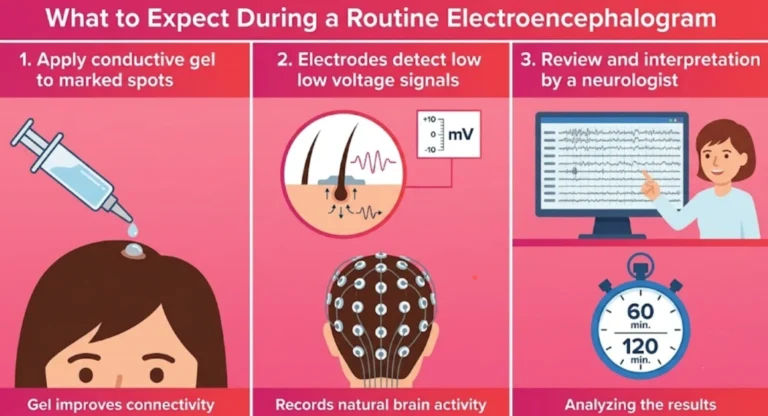
NRPI offers Home Sleep Study Testing (HST) — a convenient, comfortable alternative to an overnight stay in a sleep lab. A home sleep test involves wearing a small monitoring device overnight in your own bed. The device records your breathing patterns, blood oxygen levels, heart rate, and body position while you sleep in your normal environment.
Home sleep testing is FDA-approved for diagnosing obstructive sleep apnea and is covered by most major insurance plans. It is particularly well-suited for patients with moderate to high clinical suspicion for OSA. For patients who may have central sleep apnea or who have significant other medical conditions, a full in-lab polysomnogram may be recommended instead.
Treatment Options for Sleep Apnea
The most effective and most widely recommended treatment for moderate to severe obstructive sleep apnea is CPAP (Continuous Positive Airway Pressure) therapy — a mask worn during sleep that delivers a continuous stream of air pressure to keep the airway open. When used consistently, CPAP is highly effective at eliminating apnea events and restoring normal sleep architecture.
For patients who cannot tolerate CPAP, alternatives include:
- Oral appliances — custom-fitted dental devices that reposition the jaw to keep the airway open
- Positional therapy — for patients whose apnea occurs primarily or exclusively when sleeping on their back
- Weight loss — excess weight, particularly around the neck and throat, is a major risk factor for OSA; even modest weight loss can significantly reduce apnea severity
- Surgery — in selected cases, surgical procedures can enlarge the airway
- Treatment of underlying conditions — for central sleep apnea, addressing the underlying neurological or cardiac cause is the primary focus
Dr. Manohar will work with you and, where appropriate, coordinate with your primary care physician or other specialists to develop a treatment plan that fits your specific situation.
Frequently Asked Questions About Sleep Apnea
Can children have sleep apnea?
Yes. Pediatric sleep apnea is more common than many parents realize, and it often presents differently from adult sleep apnea — children may be hyperactive rather than sleepy during the day, and bedwetting is sometimes associated. If your child snores loudly, breathes noisily during sleep, or seems excessively tired or behaviorally difficult, a sleep evaluation is worth pursuing.
Is sleep apnea dangerous if left untreated?
Yes. Untreated sleep apnea significantly increases the risk of hypertension, heart disease, stroke, type 2 diabetes, and cognitive decline. It also increases accident risk due to daytime drowsiness. The good news is that effective treatment reverses many of these risks.
Does NRPI offer telehealth for sleep apnea follow-up?
Yes. Once a diagnosis has been established and treatment initiated, many follow-up appointments can be conducted via telehealth — which is particularly convenient for patients in Harlingen, Brownsville, Rio Grande City, and other parts of the RGV who live farther from our Edinburg office.
Serving Sleep Apnea Patients Across the Rio Grande Valley
Neuro Rehab & Pain Institute offers home sleep study testing and comprehensive sleep disorder evaluation in Edinburg, TX, serving patients from McAllen, Pharr, Mission, Weslaco, Harlingen, Rio Grande City, Brownsville, and across South Texas. If you suspect you have sleep apnea — or if your partner has told you that you stop breathing at night — we encourage you to schedule an evaluation before the condition causes further neurological consequences.
Call us: (956) 683-9300